What Is Blogging?

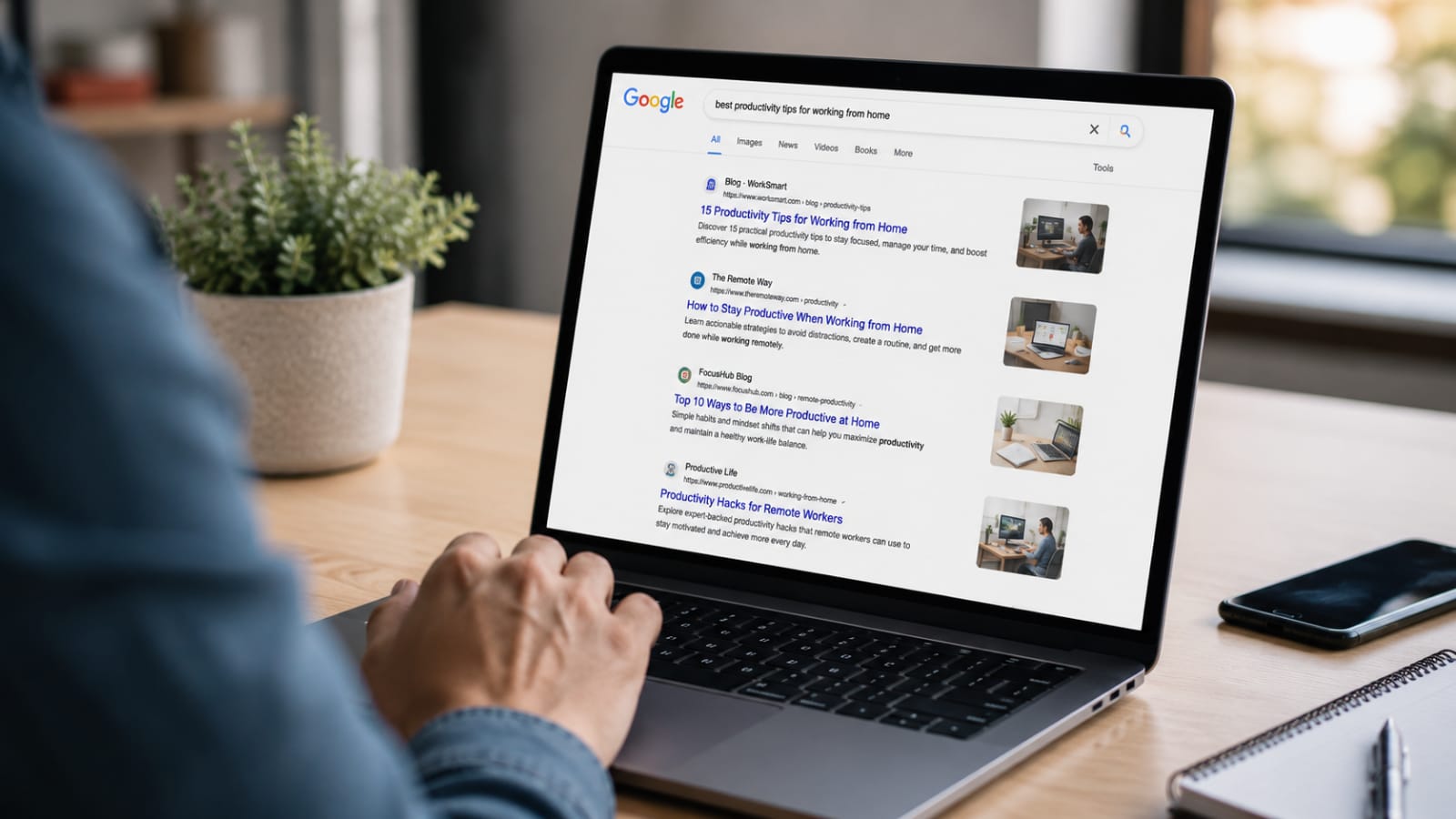
Have you ever searched for something on Google and found the exact answer you needed in an article?
Maybe you wanted to learn how to start a website, fix a phone problem, compare laptops, or find the best travel destinations, got your answer, and left.
That page was most likely a blog post.
Many people read online content every single day without even realizing it. Blogs have become one of the biggest sources of information on the internet. Whether you are learning a new skill, comparing products before buying, or looking for a solution to a problem, there is a good chance a blog article helped you.
Years ago, blogs were mostly online personal journals where people shared their thoughts and daily experiences. Today, blogging has changed completely. Modern websites teach, inform, solve problems, review products, share tutorials, and help businesses connect with customers.
If you are asking what is blogging, how it works, and whether it is still worth starting in 2026, this guide explains everything in simple language without confusing technical terms.
What Does Blogging Mean?
Understanding what is blogging goes beyond just writing articles; it is about consistently helping readers with useful content.
Technically, blogging is the process of creating and publishing articles on a website. These written pieces are called blog posts.
Unlike social media posts, blog posts are designed to stay useful for months or even years. A well-written article can continue bringing visitors from search engines long after it has been published.
Think about this:
If someone searches for “How to start a blog” today and your article answers that question clearly, Google may recommend your article to thousands of people over time.
That is one of the biggest reasons blogging is still so valuable. Instead of creating content that disappears after a few hours on social media feeds, blogging allows your work to keep helping people long into the future.
Why Is Blogging Still Popular in 2026?
When exploring what is blogging today, some people wonder if it is dead because video platforms like YouTube, TikTok, and Instagram are so popular.
The truth is quite different.
Videos are great for entertainment and visual demonstrations, but millions of people still prefer reading when they need quick, direct answers.
Imagine you want to know:
- How to install WordPress
- Best laptops under $700
- How to improve website speed
- What is SEO?
- How to start affiliate marketing
Most people still search these questions on Google. That is where written articles shine. A helpful post can answer a question in just a few minutes without making readers watch a long video.
Google also continues to send billions of visitors to quality websites every month. As long as people use search engines to find information, blogging will remain essential.
Blogging vs. A Standard Website
Understanding what is blogging helps you differentiate between a dynamic blog and a simple static website. To truly grasp what is blogging, it helps to compare a dynamic blog with a standard business website. Many beginners think a blog and a website are exactly the same. They are closely related, but they serve different purposes.
- A Website: Any collection of web pages on the internet. It can be a static business page, an online store, a portfolio, or a news site that rarely updates its content.
- A Blog: A dynamic type of website that regularly publishes fresh content, usually in reverse chronological order (newest posts first).
Example Comparison:
A standard restaurant website may only have:
- Home
- Menu
- Contact Us
- About Us
A food blog usually includes:
- Home
- Categories (Recipes, Meal Plans, Cooking Tips)
- Recent Blog Posts
- About & Contact
- Privacy Policy
The biggest difference is that blogs continue growing by adding fresh content. Every new article creates another opportunity for people to discover your website through search engines.
Different Types of Blogs (Popular Niches)
When exploring what is blogging, you will find various categories such as tech, lifestyle, and travel. One of the best things about blogging is that you can write about almost anything you are passionate about.
Some of the most popular blogging niches include:
1. Technology Blogs
Tech bloggers review gadgets, compare smartphones, explain software, and publish step-by-step tutorials.
- Examples: Laptop reviews, AI tools, mobile apps, Windows tips, internet security.
2. Business & Marketing Blogs
These blogs help readers learn about entrepreneurship, startups, freelancing, online income, and productivity.
- Examples: Starting a small business, online business ideas, productivity tools.
3. Health & Fitness Blogs
Health blogs focus on healthy living, exercise routines, nutrition, and wellness tips. (Note: Good health blogs rely on trustworthy information and avoid unrealistic promises).
4. Travel Blogs
Travel bloggers share destination guides, travel tips, hotel reviews, budgeting advice, and personal travel experiences.
5. Food Blogs
Food blogs publish recipes, cooking tips, kitchen equipment reviews, and meal plans.
6. Personal Finance Blogs
These blogs teach people how to save money, budget, invest, reduce debt, and build better financial habits.
7. Educational Blogs
Educational blogs explain complex subjects in a simple way.
- Examples: Language learning, science, mathematics, career guidance.
Why Do People Start Blogs?


People explore what is blogging for various reasons. Some simply enjoy writing and sharing knowledge, while others use blogs to build a personal brand.
- Sharing knowledge and experience
- Teaching new skills
- Building an audience and authority
- Growing an existing business
- Creating passive income online
- Helping people solve specific problems
The most successful blogs focus on helping readers first. When readers trust your content, opportunities such as advertising, affiliate marketing, and brand sponsorships follow naturally.
How Does Blogging Actually Work?
If you are new to learning what is blogging, the underlying technical process might seem complicated, but the core process is straightforward:
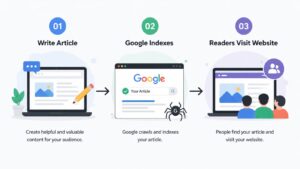
- You build a website: Set up a clean, user-friendly platform.
- You publish content: Write helpful articles addressing specific topics or problems.
- Search engines index it: Google discovers, analyzes, and lists your content.
- Visitors arrive: When people search for terms related to your article, search engines display your link. Readers click, get value, and return for more.
This cycle repeats every time you publish high-quality content. Over time, your content library grows, increasing your search engine visibility and overall traffic.
How to Start a Blog in 2026 (Step-by-Step)
Choosing a specific niche is an essential step once you get a clear idea of what is blogging. Now that you understand what is blogging, let’s walk through setting up your blog step by step.
Starting a blog is easier today than ever before. Most web hosts offer one-click installation for content platforms, meaning no coding skills are required.
Step 1: Choose Your Niche
Your niche is your blog’s main topic. Avoid writing about unrelated subjects (e.g., tech today, travel tomorrow), as this confuses search engines and readers alike. Pick one focused topic and stick to it.
Step 2: Register a Domain Name
Your domain name is your online address (e.g., novahubmedia.com). Choose a domain that is short, easy to spell, memorable, and free of unnecessary hyphens or numbers.
Step 3: Buy Web Hosting; Web hosting stores your website files and makes them accessible online 24/7. Look for web hosts that provide fast loading speeds, solid security (free SSL), reliable support, and easy WordPress integration.
Step 4: Install WordPress
WordPress is the most popular Content Management System (CMS) globally. It is flexible, beginner-friendly, and supports thousands of themes and plugins.
Step 5: Choose a Clean Theme
Select a lightweight, mobile-responsive theme. Clean designs enhance user experience, load faster, and improve your SEO performance
Step 6: Create Essential Pages
Before launching, set up foundational pages:
- About Us
- Contact Us
- Privacy Policy
- Terms & Conditions
- Disclaimer
These pages build credibility with readers and are required by ad networks like Google AdSense.
Step 7: Publish Helpful Content
Start writing articles aimed at solving specific problems. Instead of broad topics like “Technology Tips,” narrow your scope to focused queries like “Best Free AI Tools for Students in 2026.” Specific topics face less competition and rank faster.
Basic SEO Tips for Beginners

Search Engine Optimization (SEO) helps your content rank higher on search engines like Google.
- Write for Humans First: Answer questions clearly in simple language instead of stuffing keywords artificially.
- Use Proper Headings: Organize your content with H1 for the title, H2 for main sections, and H3 for subtopics.
- Add Internal Links: Connect related articles on your site to help visitors and search engines discover more content.
- Optimize Images: Compress images to maintain fast page loading speeds and include descriptive Alt text.
How Do Bloggers Make Money?

Display ads and sponsored posts are popular options for anyone researching what is blogging and how to earn from it. A major reason why so many people research what is blogging is the financial opportunity behind running a successful site. Monetizing a blog requires patience, consistent traffic, and audience trust. Here are the primary income channels:
1. Display Advertising
Ad networks like Google AdSense or Mediavine display ads on your blog. You earn revenue based on impressions and clicks.
2. Affiliate Marketing: As you discover what is blogging and start getting traffic, you can promote products and earn a commission for every sale made through your link.
3. Selling Digital Products
Many creators package their expertise into downloadable resources such as E-books, online courses, templates, or printable guides.
4. Freelancing & Consulting
A blog acts as an interactive portfolio showcasing your knowledge, attracting clients who need your professional services.
5. Sponsored Posts
Brands pay established bloggers to review products, feature services, or write sponsored articles for their audience.
Common Blogging Mistakes to Avoid
When research turns from learning what is blogging to running a site, avoiding common beginner errors will save you months of effort.
- Choosing Too Many Topics: Lack of focus prevents you from building topical authority.
- Inconsistent Posting: Publishing sporadically hurts search engine crawling and user retention.
- Ignoring Search Intent: Writing without considering what readers are actively searching for.
- Neglecting Old Content: Outdated articles drop in rankings; update old posts periodically with fresh information.
- Quitting Too Early: SEO takes time to gain traction. Consistency over months yields the best results.
Essential Blogging Tools
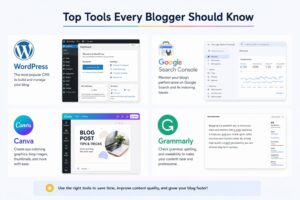
Once you understand what is blogging, using the right essential tools will help you manage and grow your website faster.
- WordPress: The leading content platform.
- Google Search Console: Tracks search performance, keywords, and indexing status.
- Google Analytics: Analyzes audience behavior and traffic sources.
- Canva: Simple graphic design tool for blog visuals and featured images.
- Rank Math SEO: A plugin that guides page-level SEO optimization.
Frequently Asked Questions (FAQs)
Is blogging free to start?
You can start for free on platforms like Medium or Blogger. However, owning a custom domain name and web hosting gives you complete control, better branding, and superior monetization options.
How long does it take to make money from blogging?
It typically takes 6 to 12 months of consistent content publishing and SEO optimization to see steady traffic and initial revenue.
Do I need coding skills to start a blog?
No. Modern CMS platforms like WordPress and drag-and-drop page builders allow you to build and manage a blog without writing any code.
